
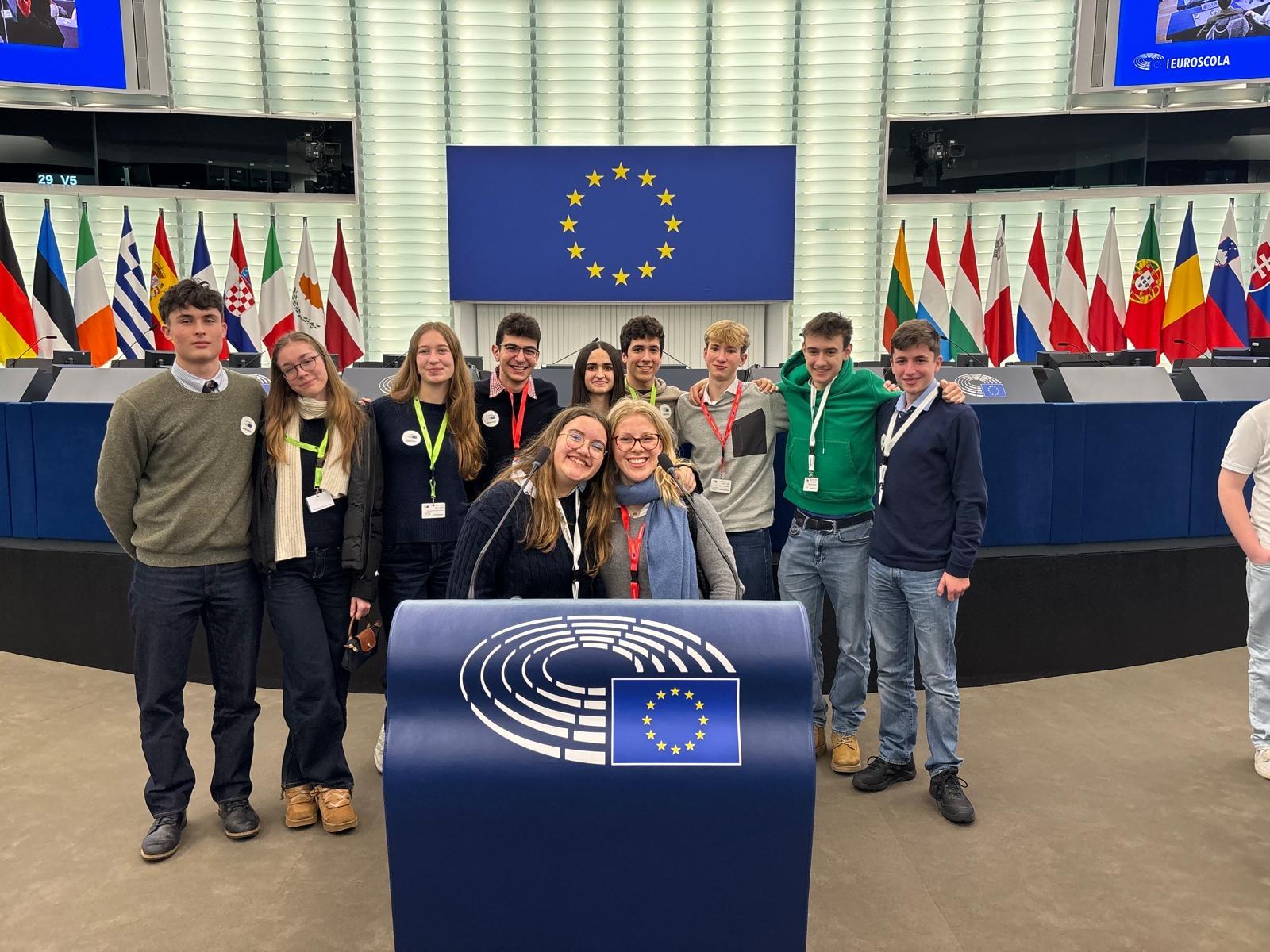
On January 28th, 21 students from the European Studies Club, accompanied by Ms. Roe and Ms. Kern, traveled to Strasbourg. Their first meeting point was St. Pancras, where the group boarded the Eurostar to Paris at 8:00 a.m. They had an hour and a half to explore the city before continuing their journey to Strasbourg’s main train station. Strasbourg is located in the far east of France, right on the border with Germany (Baden-Württemberg), and was once part of Germany, which explains the presence of street names in the old town in both German and French. According to Wikipedia, Strasbourg is the eighth largest city in France and is over 2,000 years old. After dropping off their luggage at the youth hostel, the students were free to explore Strasbourg in groups for the rest of the afternoon and dinner. Their sightseeing included canals and rivers, bridges, churches, and buildings in the Baroque, Medieval, and Gothic styles. The old town was very pleasant, easily accessible on foot, and quite empty due to the time of year and the weather, which, in contrast to Paris, felt very quiet and relaxing.
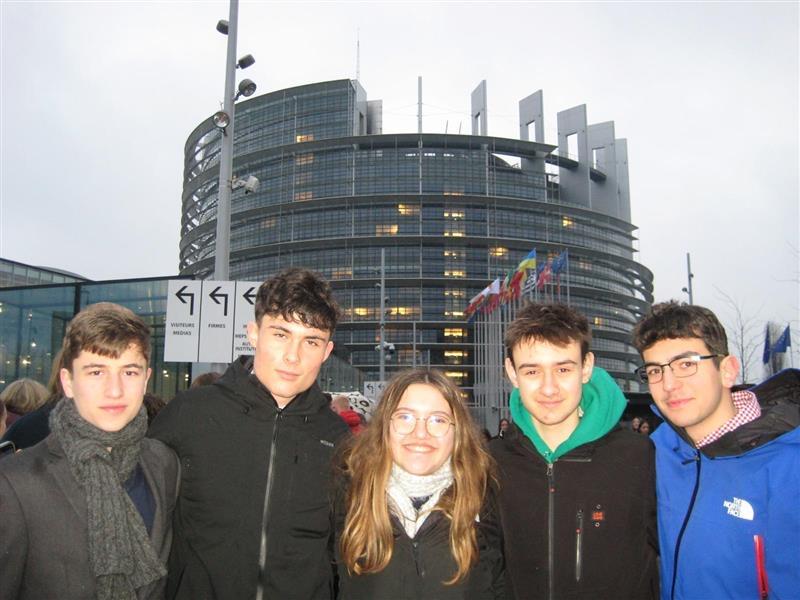
The next day, the group got up early again to pack their luggage and have breakfast at the youth hostel, where they also saw other European students. Shortly before nine, the group arrived at the European Parliament by tram. After security and passport control, the students were assigned seats in small groups, but these were spread throughout the parliament building. The parliament itself had almost 1,000 seats, each equipped with headphones for interpreters in English, German, and French, who translated from those three languages as well as Italian and Spanish. The session was chaired by two moderators who called on speakers and taught the European Ambassadors the usual etiquette. During the first three hours, the approximately 800 to 900 ambassadors from all EU countries and the United Kingdom (only the DSL students) were able to talk about their trip and ask questions of an environmental expert from France and Esteban González Pons from Spain (one of the fourteen vice-presidents of the European Parliament). Both participated via video link and answered questions that ranged from specific and precise to vague or personal.
There was a lunch break. Many students ate with their friends, but some from the DSL sat with students from a school in Aix-en-Provence (north of Marseille) who spoke fluent English and French, as well as good German.
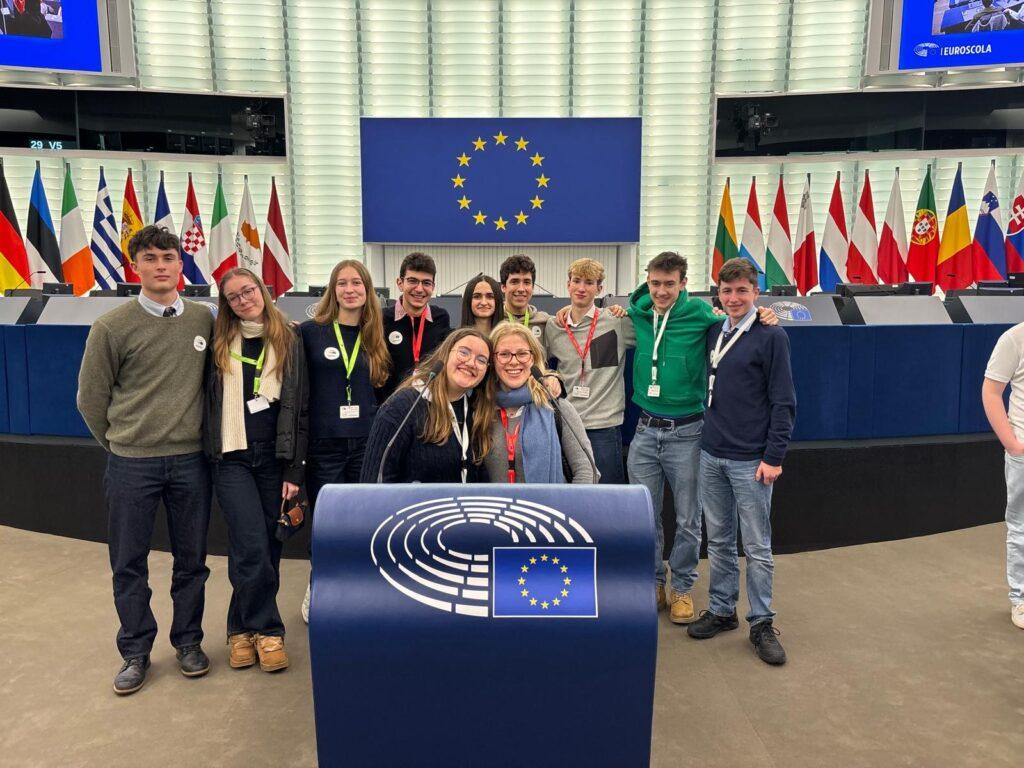
In the second half of the session, there was a simulated debate on EU climate policy. The ambassadors were divided into three groups: one in favor of stricter climate policy rules, one against, and a compromise group in between. Because the students at DSL were seated in groups, they were in all three groups. During the debate, the moderator called on one of the ambassadors who raised their hand. That student was given one minute to present and explain their argument. Of course, not everyone got a turn, but because the debate lasted over an hour, there were countless arguments from all sides. Finally, the students, regardless of their assigned group and according to their own opinions, were allowed to vote for or against legislative changes or climate policy measures, or to abstain. At the end, the ambassadors were asked further questions, such as whether they had taken anything away from the session or whether they believed there was gender equality in the EU. All the visitors received small souvenirs, such as EU baseball caps, pencils, or even EU flags.
After 5 p.m., the group collected their luggage and made their way to the airport, arriving at Gatwick in the evening.
The group gained valuable experience learning how politics functions in a multinational parliament, how to communicate and behave in such a setting, and how to interact with people from diverse backgrounds. Everyone had a great time, and it was a highly recommended experience.
EPAS Team Comment
Thanks for such a great write-up of what sounds like an amazing trip. Brilliant that your students seized the opportunity to mix with other students from around Europe.